What documents are required for international freight? The answer depends on the cargo, transport mode, origin, destination, and customs rules. Still, most shipments begin with a commercial invoice, packing list, and transport document. Ocean freight usually requires a bill of lading. Air freight normally uses an air waybill. These documents identify the seller, buyer, cargo description, quantity, weight, value, and delivery terms.
Details matter. A carton marked “machine parts” may not satisfy customs officers. A clearer description, such as “stainless-steel pump components,” can prevent avoidable questions. The invoice should match the packing list and transport document. Even a small difference in weight or package count can delay clearance. I have seen shipment preparation treated as routine paperwork. That assumption is costly.
David Widdowson, a respected customs and trade-facilitation expert, has said, “Customs is not about revenue collection; it is about facilitating trade.” His view highlights the purpose behind accurate documentation. Depending on the shipment, exporters may also need a certificate of origin, export declaration, insurance certificate, import permit, or product-specific compliance records. Requirements can change by country and commodity. Check them carefully.
There is no universal document bundle. That is the uncomfortable part. Freight forwarders can review documents, but the shipper remains responsible for truthful information. A practical document check should compare names, addresses, tariff classifications, quantities, values, and Incoterms. Keep digital and paper copies where appropriate. Ask questions early. One missing signature can stop an otherwise ready shipment.
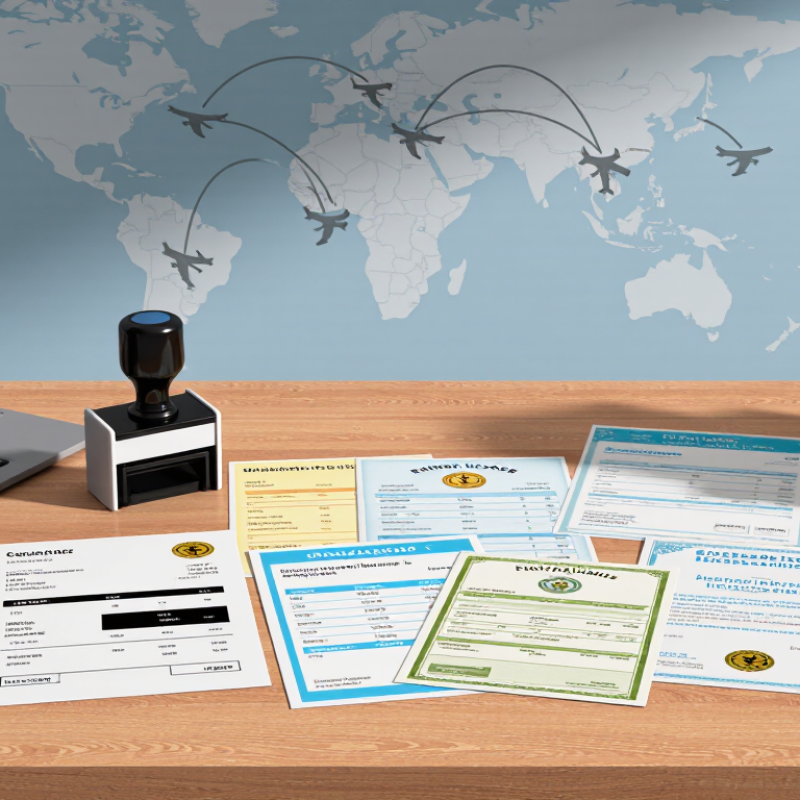
For China international freight, three documents form the core file set: the commercial invoice, packing list, and sales contract. Each document explains a different part of the shipment. The invoice states the seller, buyer, product description, quantity, unit price, currency, and total value. Customs officials use these details to assess the shipment accurately.
The packing list describes the physical cargo. It should show carton numbers, package dimensions, gross weight, net weight, and product quantities. For example, carton 03 should match the carton marked on the cargo. Small differences can cause delays. The sales contract provides commercial context, including agreed prices, delivery terms, payment conditions, and product specifications. It may not always be requested at clearance, but it can support the declared value when questions arise.
Consistency matters more than attractive formatting. Product names, quantities, weights, and prices should match across all three files. A practical review compares each line item before cargo pickup. I have found that rushed edits often create conflicting figures. That is easy to overlook. Digital copies should remain readable, while signed versions may be required by the buyer, carrier, or local authority. Requirements can differ by destination, product type, and transport method, so the current instructions from customs authorities or a qualified freight professional deserve attention. Some documents also need translation or additional certificates, depending on the shipment.
What Documents Are Required for China International Freight?
The transport document should match the route, not merely the shipment value. Ocean cargo normally uses a Bill of Lading (B/L). It records the shipper, consignee, cargo description, packages, and loading port. A negotiable B/L may control cargo release, so every name and address needs careful checking. For air shipments, the Air Waybill (AWB) is the standard record. It shows the flight movement, handling instructions, chargeable weight, and delivery airport. Unlike a negotiable B/L, an AWB generally does not transfer ownership of the goods.
Rail freight uses a rail consignment note. It connects the cargo with the train route, border points, wagon or container details, and receiving party. Dates matter. A small mismatch between the rail note and the commercial invoice can delay document review. The transport document should also agree with the packing list, invoice, and customs declaration. Check carton counts, gross weight, container numbers, and shipping marks before departure. One missing digit can create real trouble.
In practice, ask the carrier which document format applies before cargo handover. Some shipments involve house and master documents, which can confuse new exporters. I have found that early checking is faster than correcting a released document. Still, document rules and carrier procedures can change. Confirm the latest requirements with the carrier, freight forwarder, and relevant customs authorities. Be precise, but leave room for review.
| Transport Mode | Primary Transport Document | Issued By | Main Purpose | Negotiable? | Typical Shipment Details | Common Supporting Documents | Document Format and Release | When This Document Is Required |
|---|---|---|---|---|---|---|---|---|
| Ocean Freight | Bill of Lading (B/L) | Ocean carrier or its authorized agent | Evidence of the contract of carriage, receipt of cargo, and—when issued as an original negotiable bill—document of title. |
May be negotiable Depends on the type of B/L and its stated terms. |
Shipper, consignee, notify party, vessel and voyage, port of loading, port of discharge, cargo description, package count, gross weight, and freight terms. | Commercial invoice, packing list, export declaration, certificate of origin when required, permits or licenses for controlled goods, and insurance certificate when applicable. | May be issued as an original paper B/L, sea waybill, or electronic transport document. Delivery procedures depend on the release instruction and carrier terms. | Used for containerized or bulk cargo transported by sea from a Chinese port to an overseas port. The correct document type should be confirmed before shipment if banks or a documentary letter of credit are involved. |
| Air Freight | Air Waybill (AWB) | Air carrier, freight forwarder, or authorized cargo agent | Evidence of the air carriage contract and receipt of goods. It provides shipment instructions and tracking information. |
Normally non-negotiable It is generally not a document of title and does not transfer ownership by endorsement. |
Shipper, consignee, origin and destination airports, number of pieces, chargeable weight, dimensions, commodity description, handling instructions, and declared values when applicable. | Commercial invoice, packing list, export declaration, import permits where required, safety or product certificates, and a security or dangerous-goods declaration when applicable. | Usually issued electronically or as a printed copy. A master AWB may cover the carrier movement, while a house AWB may be issued by a freight forwarder. | Required for commercial air cargo and commonly used for urgent, high-value, or time-sensitive shipments. Dangerous goods require additional air-transport documentation. |
| Rail Freight | Rail Consignment Note | Rail carrier, rail operator, or authorized freight forwarder | Records the rail carriage contract, shipment instructions, cargo acceptance, route, and delivery requirements. |
Generally non-negotiable It usually functions as a transport receipt rather than a document of title. |
Consignor, consignee, departure and destination terminals, route, wagon or container details, package count, cargo description, gross weight, customs status, and border-crossing information. | Commercial invoice, packing list, export declaration, customs transit documents when applicable, certificate of origin, permits, and cargo insurance documents when required. | May be issued electronically or on paper, depending on the rail corridor, carrier, and customs requirements. Multiple rail or transit documents may be used for cross-border movements. | Used for cargo moving by rail from China to destinations connected by international rail corridors. The exact consignment-note format depends on the route and participating rail systems. |
| Multimodal or Combined Transport | Multimodal Transport Document | Multimodal transport operator or freight forwarder | Covers a shipment moving under one transport contract across two or more modes, such as rail and ocean or truck and air. |
Depends on document type The terms determine whether it is negotiable or non-negotiable. |
Place of receipt, place of delivery, transport modes, routing, shipper and consignee, cargo details, freight terms, and delivery instructions. | Commercial invoice, packing list, export declaration, certificates of origin, permits, insurance documents, and any mode-specific documents such as an AWB or B/L. | May be electronic or paper. The document issued by the multimodal operator does not always replace every operational document required by individual carriers or customs authorities. | Appropriate when one provider organizes the full movement from an inland location in China to the final overseas destination under a single transport contract. |
| All International Freight Shipments | Commercial Invoice and Packing List | Exporter or seller | Support customs valuation, classification, cargo identification, and shipment preparation. These documents are not substitutes for the primary transport document. | Not applicable | Seller and buyer, product description, quantity, unit price, total value, currency, country of origin, package marks, dimensions, net weight, and gross weight. | Export declaration, import declaration, certificate of origin, licenses, inspection certificates, and product-specific compliance documents when required. | Commonly transmitted electronically to the carrier, forwarder, customs broker, and customs authorities. Original or legalized copies may be required for specific transactions. | Normally required for customs clearance and freight processing, regardless of whether the shipment travels by ocean, air, rail, or a combination of modes. |
| Regulated or Special Cargo | Additional Compliance Documents | Exporter, manufacturer, testing body, competent authority, or authorized agent | Demonstrate that the goods meet transport, customs, safety, or destination-country regulatory requirements. | Not a transport document | Product identifiers, technical specifications, hazard classification, UN number where applicable, quantities, packaging information, and regulatory references. | Dangerous-goods declaration, safety data sheet, export or import license, health certificate, phytosanitary certificate, fumigation certificate, conformity documents, or inspection certificate, depending on the goods. | Format and issuing authority depend on the commodity and transport mode. Some documents must accompany the cargo, while others are submitted electronically before departure or arrival. | Required only when the product, packaging, destination, or transport method is subject to additional controls, including dangerous goods, food, plants, chemicals, batteries, and controlled products. |
Document requirements vary by cargo type, Incoterms, destination-country rules, customs procedures, carrier instructions, and payment method. Confirm the final document list with the carrier, freight forwarder, customs broker, and relevant authorities before shipment.
For China international freight, accurate HS-code verification is as important as the commercial invoice or packing list. The World Customs Organization’s HS 2022 system contains more than 5,600 six-digit subheadings. These six digits create the global classification baseline. China then extends many items into a ten-digit national classification. The final digits may affect duty rates, inspection requirements, and import controls.
Check the code before booking cargo. Compare the product’s material, function, processing level, and technical specifications. A digital kitchen scale, for example, may require different treatment from an industrial weighing instrument. Your document set should normally include the commercial invoice, packing list, bill of lading or airway bill, sales contract, and import declaration data. Additional certificates may apply to regulated products.
UNCTAD’s Review of Maritime Transport 2023 reports that over 80% of global merchandise trade by volume moves by sea. Small classification errors can therefore travel through complex supply chains. In shipment reviews, I would request the Chinese ten-digit code from a qualified customs specialist, not copy a supplier’s old record. Old records can be wrong. Product changes also matter. A practical weakness is that companies often verify the six-digit code but overlook China’s additional digits. That gap deserves a second review before customs filing.
Compliance proof deserves more attention than a polished invoice. The OECD Trade Facilitation Indicators report links stronger border procedures with lower trade costs, potentially by 12.5% to 17.5% in developing economies. For China international freight, prepare a commercial invoice, packing list, transport document, and a certificate of origin. The certificate should match the invoice, HS code, exporter, consignee, and manufacturing country. One wrong digit can trigger questions.
A certificate of origin supports tariff treatment and customs verification. It does not replace an export license when the product or destination requires one. Check the applicable Chinese and destination-country rules before booking. Keep copies of licenses, authorization letters, and product registrations in one controlled file. Digital scans help, but originals may still matter. Small mismatch. Costly delay.
Inspection files should show what was checked, when, and by whom. Include inspection reports, test results, weight records, photographs, and any required quarantine or treatment certificates. UNCTAD’s Review of Maritime Transport 2024 states that maritime shipping carries over 80% of global merchandise trade by volume. That scale makes document accuracy operationally important. In practical reviews, I often find complete paperwork with inconsistent carton counts. It is easy to miss. Reconcile quantities across the invoice, packing list, inspection report, and bill of lading. A neat folder is not proof of compliance; evidence must remain traceable, current, and understandable to customs officers.
For China international freight, the document list changes with the chosen Incoterms® 2020 rule. These 11 rules clarify who pays, arranges transport, and assumes risk. They do not replace customs law or create every document. A practical review starts with the sales contract, commercial invoice, packing list, and transport document. The named place matters. “DAP warehouse” creates different duties from “FOB port.” Small wording errors can shift unexpected costs.
Under EXW, the buyer usually arranges export clearance and most transport. Local practice may make this difficult. Under FCA, the seller handles export clearance and delivers goods to the agreed carrier. FOB, CFR, and CIF apply only to sea or inland waterway shipments. For CIF, the seller arranges freight and minimum insurance, but risk transfers when goods are loaded onboard. CIP requires broader insurance coverage. That distinction is often missed.
For DAP, the seller delivers goods ready for unloading. The buyer normally manages import clearance, duties, and taxes. DDP places the widest delivery burden on the seller, where legally possible. Supporting documents may include certificates of origin, export declarations, inspection records, and insurance certificates. Check names, quantities, weights, dates, and consignee details across every file. One mismatch can delay release. I have seen teams verify freight charges but overlook risk transfer. That is not a minor gap. Review the rule, named place, transport mode, and document duty together before booking. Even a careful checklist can miss local requirements.
Ocean cargo normally uses a Bill of Lading. It records the shipper, consignee, cargo, packages, and loading port. Check every name and address carefully. One missing digit matters.
Air shipments normally use an Air Waybill. It records flight movement, handling instructions, chargeable weight, and delivery airport. It generally does not transfer ownership of the goods.
Rail freight uses a rail consignment note. It connects the cargo with the train route, border points, wagon or container details, and receiving party. Dates must match related documents.
Compare the transport document with the invoice, packing list, and customs declaration. Check carton counts, gross weight, container numbers, shipping marks, and consignee details. Small mismatch. Costly delay.
Ask the carrier before handing over the cargo. Some shipments have house and master documents, which may confuse new exporters. Rules can change. Confirm current requirements with the carrier, forwarder, and customs authorities.
It should match the invoice, HS code, exporter, consignee, and manufacturing country. A certificate of origin may support tariff treatment and customs verification. It does not replace a required export license.
Check Chinese and destination-country requirements before booking. Keep licenses, authorization letters, and product registrations in one controlled file. Digital scans help, but originals may still be required.
Include inspection reports, test results, weight records, photographs, and required quarantine or treatment certificates. Each record should show what was checked, when, and by whom. Evidence must stay traceable and current.
Reconcile quantities across the invoice, packing list, inspection report, and transport document. I still recheck carton counts because neat folders can hide errors. Check before departure.
What documents are required for international freight depends on the cargo, transport method, destination, and applicable trade rules. The core file set usually includes a commercial invoice, detailed packing list, and sales contract, which together explain the transaction, cargo value, quantities, and agreed terms. Shippers must also prepare the correct transport document, such as a bill of lading for ocean freight, an air waybill for air shipments, or a rail consignment note for rail transport.
Accurate HS classification is essential, beginning with the globally recognized six-digit code and extending to the ten-digit classification required in China when applicable. Additional documents may include a certificate of origin, import or export licenses, permits, and inspection or quality certificates. Finally, reviewing the selected Incoterms® 2020 rule helps clarify which party is responsible for costs, risk, insurance, customs procedures, and document preparation, reducing delays and misunderstandings during international shipping.

NoviLink Logistics